
No products in the cart.

 28Jul
28JulWhen choosing flooring for commercial, industrial, sports, or residential spaces, durability and long term performance are essential. While both rubber flooring and PVC flooring are popular options, they differ significantly in safety, comfort, sustainability, and lifespan.
In many demanding environments, rubber flooring consistently outperforms PVC because of its superior resilience, slip resistance, shock absorption, and sustainability. This guide explains why rubber flooring is often the preferred choice across various industries.
Understanding Rubber Flooring and PVC Flooring
Before comparing their performance, it is important to understand what each flooring material offers.
Rubber flooring is manufactured from natural rubber, synthetic rubber, or a combination of both. It is commonly available as rolls, mats, interlocking tiles, and molded sheets designed for heavy duty applications.
PVC flooring, also known as vinyl flooring, is manufactured from polyvinyl chloride combined with plasticizers and other additives. It is available in sheets, planks, and tiles and is widely used for decorative indoor flooring.
Although both materials have practical applications, rubber flooring delivers greater reliability where performance and safety matter most.
Key Advantages of Rubber Flooring Over PVC Flooring
1- Superior Durability for High Traffic Areas
One of the biggest reasons businesses choose rubber flooring is its exceptional durability. It is engineered to withstand constant foot traffic, heavy equipment, and daily wear without cracking, chipping, or losing its structural strength, making it suitable for demanding environments.
Rubber flooring performs exceptionally well in:
- Commercial buildings
- Industrial facilities
- Schools
- Hospitals
- Airports
- Gyms
- Warehouses
Unlike rubber flooring, PVC flooring is more vulnerable to scratches, dents, and surface wear under continuous heavy use. If you’re searching for a rubber flooring supplier Saudi Arabia, investing in premium industrial grade flooring ensures lasting durability, lower maintenance, and improved workplace safety.
2- Better Slip Resistance for Improved Safety
Safety is one of the most important factors when selecting flooring for commercial or industrial spaces. Rubber flooring provides excellent traction, even in areas exposed to moisture, dust, or frequent pedestrian traffic, helping reduce the risk of slips and falls.
It is commonly installed in:
- Fitness centers
- Healthcare facilities
- Manufacturing plants
- Commercial kitchens
- Children’s play areas
- Public walkways
PVC flooring can become slippery when wet, increasing the chances of workplace accidents. Rubber flooring delivers superior grip and is often manufactured to comply with international slip resistance standards.
3- Excellent Shock Absorption
Comfort and impact protection are major advantages of rubber flooring. Its natural elasticity absorbs shock efficiently, reducing stress on joints and minimizing fatigue for people who stand or walk for extended periods.
It is ideal for areas such as:
- Gym flooring
- Industrial workstations
- Laboratories
- Retail stores
- Standing work areas
PVC flooring provides minimal cushioning and feels much harder underfoot. Rubber flooring also protects equipment from accidental impacts by absorbing vibrations more effectively.
4- Outstanding Noise Reduction
Noise control is essential in workplaces, schools, hospitals, and fitness centers where a quieter environment improves comfort and productivity. Rubber flooring naturally absorbs sound vibrations, making indoor spaces noticeably quieter.
It helps reduce:
- Footstep noise
- Equipment vibration
- Echo
- Impact sounds
- Rolling trolley noise
PVC flooring offers limited acoustic insulation and often requires additional underlayment to achieve similar sound reduction. Rubber flooring delivers superior noise control without additional materials.
5- Superior Resistance to Heavy Equipment
Industrial and commercial environments demand flooring that can handle substantial weight without permanent damage. Rubber flooring maintains its shape under pressure and quickly recovers from compression caused by heavy loads.
It withstands:
- Heavy machinery
- Rolling equipment
- Forklift traffic in suitable grades
- Industrial carts
- Exercise machines
PVC flooring is more likely to develop dents and permanent indentations under continuous heavy loading. Rubber flooring therefore remains the preferred choice for demanding industrial applications.
6- Better Temperature Performance
Temperature fluctuations can significantly affect flooring performance over time. Rubber flooring maintains its flexibility and structural stability across a broad temperature range without becoming brittle or excessively soft.
It performs reliably in:
- Indoor industrial facilities
- Warehouses
- Commercial buildings
- Utility rooms
- Covered outdoor applications
PVC flooring may expand, contract, or warp when exposed to changing temperatures or direct sunlight. Rubber flooring provides better dimensional stability and long term reliability.
7- Easier Long Term Maintenance
Routine maintenance plays an important role in extending the life of any flooring system. Rubber flooring requires minimal upkeep while maintaining its appearance even in high traffic environments.
Routine maintenance typically includes:
- Sweeping
- Vacuuming
- Damp mopping
- Mild cleaning solutions
- Periodic deep cleaning
Although PVC flooring is relatively easy to clean, scratches and damaged coatings become more visible over time. Rubber flooring better conceals everyday wear, reducing maintenance and restoration costs.
8- Environmentally Friendly Flooring Option
Sustainability has become an important consideration for modern construction and renovation projects. Many rubber flooring products are manufactured using recycled materials, helping reduce environmental impact while supporting green building initiatives.
Environmental benefits include:
- Long service life
- Reduced replacement frequency
- Lower material waste
- Recyclable material options
- Improved resource efficiency
PVC flooring may contain plasticizers and additives that raise environmental concerns, while rubber flooring offers a more sustainable alternative. As a trusted rubber sheets supplier Riyadh KSA, we also provide durable sheet materials for sealing, lining, insulation, and industrial protection applications.
9- Better Chemical and Moisture Resistance
Many industrial environments require flooring that can withstand exposure to liquids and cleaning agents. Depending on its formulation, rubber flooring provides excellent resistance to moisture, oils, and a wide range of chemicals.
It offers resistance against:
- Water
- Oils
- Mild chemicals
- Cleaning agents
- Grease
Specialized rubber compounds outperform PVC in demanding environments exposed to chemicals and moisture. For broader applications, industrial rubber products Saudi Arabia provide durable solutions for harsh operating conditions.
10- Comfortable Walking Experience
Employee comfort directly influences productivity in workplaces where standing for long periods is common. Rubber flooring provides natural cushioning that reduces fatigue and improves overall walking comfort throughout the day.
It is widely used in:
- Hospitals
- Retail stores
- Manufacturing plants
- Airports
- Educational institutions
PVC flooring generally offers less cushioning and ergonomic support. Rubber flooring creates a more comfortable working environment while helping reduce strain on the feet, knees, and lower back.
11- Fire and Safety Performance
Commercial and industrial buildings often require flooring that meets strict safety standards. Many premium rubber flooring products are manufactured to comply with recognized fire performance and building safety regulations.
Key safety features include:
- Low smoke emission
- Flame resistant properties
- Improved occupant safety
- Compliance with international standards
- Reliable long term performance
When compared with PVC flooring, commercial grade rubber flooring is often preferred for projects where fire safety, durability, and regulatory compliance are critical considerations. Always verify compliance with applicable ASTM, ISO, EN, or local building standards before installation.
Where Rubber Flooring Performs Best
Because of its versatility, rubber flooring is widely used across numerous industries.
Typical applications include:
Commercial Buildings
Retail outlets, shopping malls, offices, and reception areas benefit from durable flooring capable of handling continuous pedestrian traffic.
Healthcare Facilities
Hospitals and clinics require hygienic, comfortable, slip resistant flooring that supports patient and staff safety.
Educational Institutions
Schools and universities use rubber flooring because it withstands daily wear while reducing classroom noise.
Sports and Fitness Centers
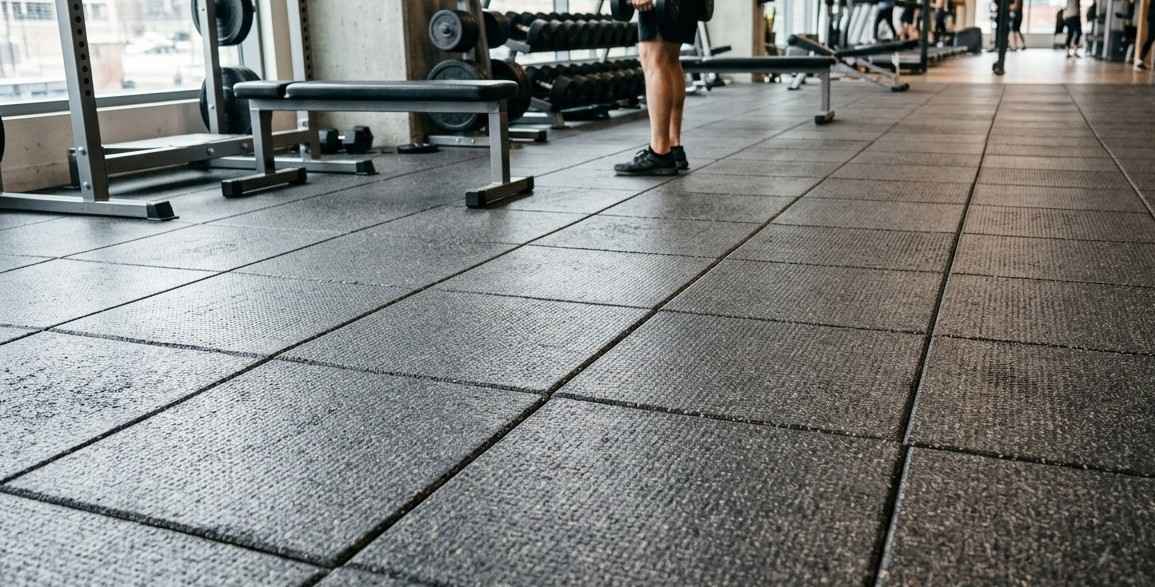
Gym flooring demands impact absorption, durability, and excellent traction, making rubber the industry standard.
Industrial Facilities
Factories and warehouses require flooring capable of supporting machinery, carts, and heavy foot traffic.
Children’s Play Areas
Rubber flooring provides cushioning that helps minimize injuries from accidental falls while offering superior grip.
Rubber Flooring vs PVC Flooring Comparison
| Feature | Rubber Flooring | PVC (Vinyl) Flooring |
| Durability | Heavy-duty; shrugs off heavy drops and weights. | Durable, but can dent under heavy machinery. |
| Comfort/Ergonomics | High; soft underfoot and eases lower back pain. | Firmer and thinner; may require a foam backing for cushion. |
| Maintenance | Requires specific sealants to prevent fluid absorption. | Completely impervious to liquids; easy to mop and sweep. |
| Chemical Resistance | Can be degraded by certain oils and solvents. | High resistance to most standard chemicals and solvents. |
| Sustainability | Often derived from natural or recycled materials. | Synthetic petroleum blend; difficult to recycle. |
Conclusion
Choosing the right flooring is about more than appearance. Rubber flooring offers superior durability, slip resistance, comfort, noise reduction, and long term value, making it a better choice than PVC flooring for demanding commercial and industrial environments.
For high quality rubber flooring solutions designed for lasting performance and safety, ISMAT Trading is a trusted supplier in Saudi Arabia, providing reliable products and expert guidance for industrial, commercial, sports, and residential flooring applications.
Contact our rubber flooring specialists today for expert guidance in selecting the right flooring solution for your application.
Explore More Industrial Materials & Component Solutions
- Silicone vs Rubber: What’s the Real Difference: Compare two of the most widely used industrial materials.
- I Tested Industrial Rubber Products: What Lasted Longest: See which materials held up best under real world stress.
- Different Types of Plastic Seals and Their Applications: Learn how plastic seals protect goods across industries.
- Static vs Dynamic Seals: What Is the Difference: Understand the key differences between seal types.
- How to Select Caster Wheels That Meet Industry Expectations: Learn what to look for when choosing durable caster wheels for demanding job sites.


