
No products in the cart.

 4Mar
4MarIn Saudi Arabia’s demanding industrial climate, rubber components face extreme heat, UV exposure, hydrocarbons, and heavy mechanical loads. From oilfields in the Eastern Province to manufacturing hubs in Riyadh and Jeddah, premature failures can halt operations and escalate costs quickly. Using precise rubber products designed for chemical resistance, thermal stability, and mechanical durability can significantly reduce these risks.
Understanding Rubber product defects is not just about quality control. One key question many industrial buyers ask is how these defects affect performance and what proven solutions can prevent them. Addressing this helps companies ensure reliability, compliance, safety, and long-term asset performance in critical sectors like petrochemicals, water infrastructure, construction, and marine applications.
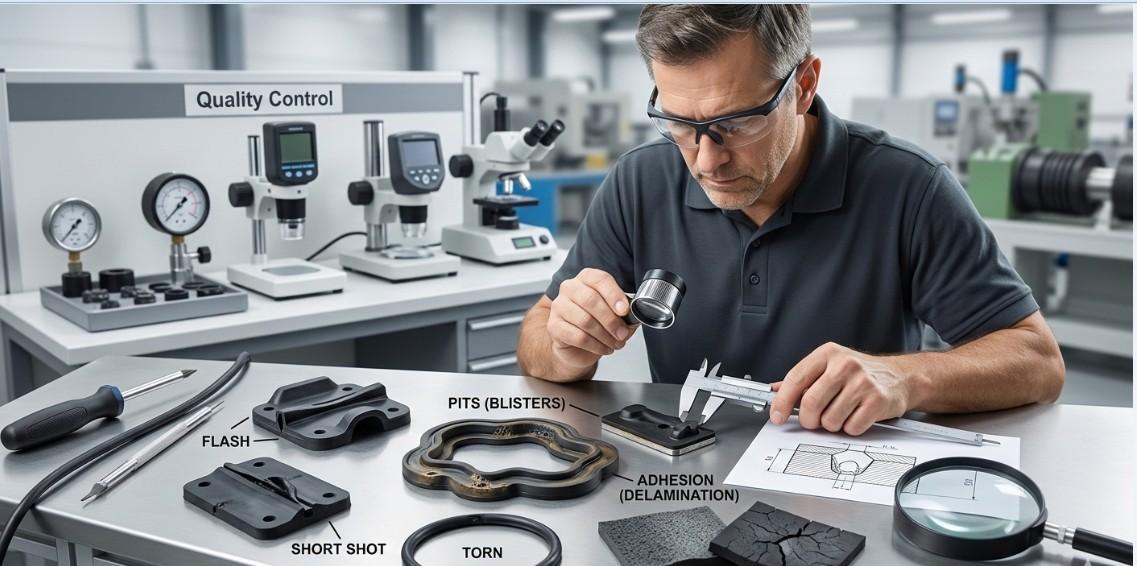
Below are the 14 most common defects observed in industrial rubber components across Saudi Arabia and the proven fixes that experienced engineers rely on.
The Foundation of Zero-Defect Manufacturing
Achieving perfection in modern processing requires a total mastery of the “Golden Triangle” of production: temperature, pressure, and time. When these variables fall out of alignment, the molecular structure of the polymer is compromised, leading to immediate structural failures.
Quality control begins with rigorous vulcanization monitoring and ends with a robust mold maintenance schedule across the facility. By focusing on these pillars, manufacturers transition from reactive firefighting to a proactive culture of technical excellence and repeatable results.
Categorizing the Top 14 Rubber Defects
1. Surface Cracking
Surface cracks appearing perpendicular to the direction of strain indicate that the rubber is being attacked due to ozone exposure, UV radiation, or improper compounding. This is a common failure in synthetic rubber like NBR or SBR when used in outdoor environments without protection.
Proven Fix
Use ozone resistant elastomers like EPDM and apply anti-ozonant additives. Storage away from direct sunlight significantly reduces early degradation.
2. Compression Set
Compression set refers to the permanent deformation of a seal after the load is removed, which is a failure for O-rings. This defect is a sign that the rubber lacks the necessary resilience to bounce back after long-term stress.
Proven Fix
Select materials with low compression set properties such as Nitrile Rubber for oil environments. Always match compound grade with operating temperature range.
3. Blistering or Air Traps
Blisters are large, gas-filled bubbles on the surface that often pop after the part is removed from the mold. These are frequently caused by the sudden expansion of trapped gases or moisture when the clamping force is released.
Proven Fix
Optimize curing cycles and ensure proper mold venting. In high precision molding, vacuum compression molding significantly reduces trapped air.
4. Delamination
In rubber-to-metal bonding, delamination occurs when the adhesive bond fails, causing the rubber to peel away from the substrate. This is usually caused by inadequate surface preparation or contamination on the metal insert before molding.
Proven Fix
Implement a rigorous degreasing and grit-blasting protocol for all metal components to ensure a high-energy surface for the adhesive. Monitoring the curing cycle is also vital to ensure the adhesive and rubber reach peak strength together.
5. Hardness Variation
Variations in Shore A hardness across a single batch indicate poor mixing or uneven heating within the press platens. This affects the mechanical properties of the part and can lead to inconsistent performance in the field.
Proven Fix
Strict batch testing with Shore A hardness measurement ensures uniformity. Advanced mixing controls in industrial plants improve consistency.
6. Swelling in Oil or Chemicals
Swelling happens when rubber absorbs hydrocarbons or aggressive chemicals, leading to dimensional instability.
Proven Fix
Material compatibility testing is critical. Using high-performance rubber compounds like fluorocarbon rubber designed for chemical resistance ensures dimensional stability even in Saudi Arabia’s petrochemical environments, extending the service life of seals and gaskets.
7. Abrasion Wear
Abrasion is common in conveyor belts, pump liners, and mining equipment exposed to sand and aggregates.
Proven Fix
Selecting industrial rubber products reinforced with carbon black or specialized fillers enhances wear resistance and ensures the components maintain their structural integrity under harsh mechanical stress.
8. Flash Formation
Flash occurs when thin layers of rubber escape the mold cavity at the parting line, indicating a loss of clamping integrity. This defect is frequently caused by worn tool steel or excessive injection pressure that overcomes the press capacity.
Proven Fix
To resolve this, audit your mold parting lines for gaps exceeding 0.02 mm and ensure your compound viscosity is not too low. Implementing precision preforms can also prevent the overcharging of cavities that leads to hydraulic lift during the cycle.
9. Shrinkage Issues
Improper shrinkage leads to dimension mismatch after molding, impacting gasket sealing efficiency.
Proven Fix
Accurate mold design calculations and post cure stabilization help maintain tolerance compliance.
10. Sticky Surface
A tacky surface often results from under curing or incorrect formulation ratios.
Proven Fix
Ensure proper vulcanization time and temperature. Laboratory rheometer testing validates cure curves before full scale production.
11. Color Fading
High UV exposure in Saudi outdoor installations causes discoloration in rubber profiles and trims.
Proven Fix
Incorporate UV stabilizers and carbon black reinforcement. Protective coatings also extend lifespan in outdoor infrastructure projects.
12. Excessive Hardening Over Time
Thermal aging causes rubber to stiffen, reducing flexibility in seals and expansion joints.
Proven Fix
Materials like high-performance seals made from heat-resistant polymers such as silicone maintain elasticity and compression properties, even in high-temperature installations common in Saudi Arabia’s industrial sectors.
13. Tear Failure
Tear failure typically occurs in dynamic applications with repeated stress cycles.
Proven Fix
Improve tear resistance through optimized filler systems and reinforcement fabrics. Proper design geometry also reduces stress concentration points.
14. Improper Vulcanization
Poor Rubber manufacturing quality control leads to under cured or over cured products, directly impacting performance and durability.
Proven Fix
Strict adherence to vulcanization standards and testing protocols aligned with ASTM International ensures mechanical property compliance.
Root Causes Behind Rubber Defects
Understanding defects requires examining the full production lifecycle:
- Raw material inconsistency
- Incorrect compounding ratios
- Inadequate curing temperature control
- Environmental exposure mismatch
- Poor storage practices
In Saudi Arabia’s climate, temperature fluctuations between storage and field installation frequently contribute to premature failures.
Preventive Quality Strategies for Saudi Industries
For buyers and procurement managers, defect prevention starts with supplier evaluation. Look for:
- Documented material traceability
- Lab testing reports
- Compliance with regional industrial standards
- Proven track record in oil and gas projects
Choosing the right Rubber seals and gaskets supplier reduces downtime and long term operational risk.
Additionally, advanced testing such as tensile strength analysis, elongation testing, and accelerated aging simulations provide measurable performance indicators before field deployment.
Why Defect Analysis Matters for Procurement Teams
Defects are not only manufacturing problems. They directly impact:
- Safety compliance
- Equipment lifespan
- Maintenance budgets
- Operational uptime
In high value sectors such as petrochemicals and desalination plants, understanding Common rubber defects improves purchasing decisions and lifecycle planning.
When evaluating Rubber quality inspection processes, prioritize suppliers that integrate third party laboratory validation and documented inspection checkpoints.
AI Overview
This blog explains the top 14 rubber product defects, their root causes, and proven industrial fixes tailored for Saudi Arabia’s harsh climate and high-performance applications.
FAQs
What are 10 products made from rubber?
Tires, O rings, gaskets, seals, hoses, conveyor belts, mounts, joints, sheets, and mats are common rubber products. They are widely used in automotive, oil and gas, construction, and industrial sectors.
What are the defects of EPDM rubber?
EPDM defects include surface cracking, compression set, shrinkage કોંગ્રેસ, and ozone degradation. Improper curing and harsh UV exposure increase failure risk.
How many types of moulding defects are there?
Common moulding defects include short shots, flash, air traps, sink marks, and dimensional variation. Most result from poor venting, pressure imbalance, or incorrect curing settings.
What rubber defects are most common in Saudi Arabia?
Surface cracking, heat hardening, and oil swelling are common in Saudi Arabia. High temperatures and UV exposure accelerate rubber aging.
How can Saudi industries improve rubber product lifespan?
Using heat and UV resistant elastomers improves durability significantly. Partnering with certified suppliers and testing materials prevents early failures.
Conclusion
Rubber product defects typically result from material mismatch, improper curing, environmental exposure, or inadequate quality control. In Saudi Arabia’s extreme climate, selecting the right compound and enforcing strict testing standards is essential to prevent premature failure and reduce operational downtime.
For organisations across Riyadh, Jeddah, Dammam, and throughout Saudi Arabia seeking reliable industrial rubber solutions, ISMAT Trading delivers high performance products supported by technical expertise and rigorous quality assurance.
Contact our rubber products specialists for durable, application specific rubber solutions built for demanding environments.
Helpful Guides You May Like
- Top Causes of Seal Failure and How to Prevent Them: Identify the root causes of seal failure and apply proven strategies to maximize sealing performance
- High Performance Seals: Types, Benefits & Industrial Uses: Explore high performance seals, their types, benefits, and key industrial applications
- What Is a Caster Wheel? Guide to Types, Sizes & Uses: Move smarter with the right caster wheel choice for every application.
- Advantages of Polyurethane Parts in Harsh Saudi Environments: Durable polyurethane solutions built to withstand Saudi Arabia’s toughest conditions.
- Why Choose Performance Seals for Your Sealing Needs?: Reliable sealing solutions for demanding industries.


