
No products in the cart.

 28Mar
28MarWhy Use a PTFE Instead of Rubber in a Rotary Shaft Seal?
Choosing the right sealing material is a mission‑critical decision for engineers and maintenance teams across various industries. When rotary motion meets fluid containment, the choice between PTFE rotary shaft seal and rubber seal impacts reliability, longevity, and total cost of ownership.
In this in‑depth guide, we explore why PTFE (Polytetrafluoroethylene) is often the superior choice over traditional elastomers like rubber, especially in demanding applications across Saudi Arabia’s oil, gas, petrochemical, and industrial sectors.
Understanding Rotary Shaft Seals and Material Roles
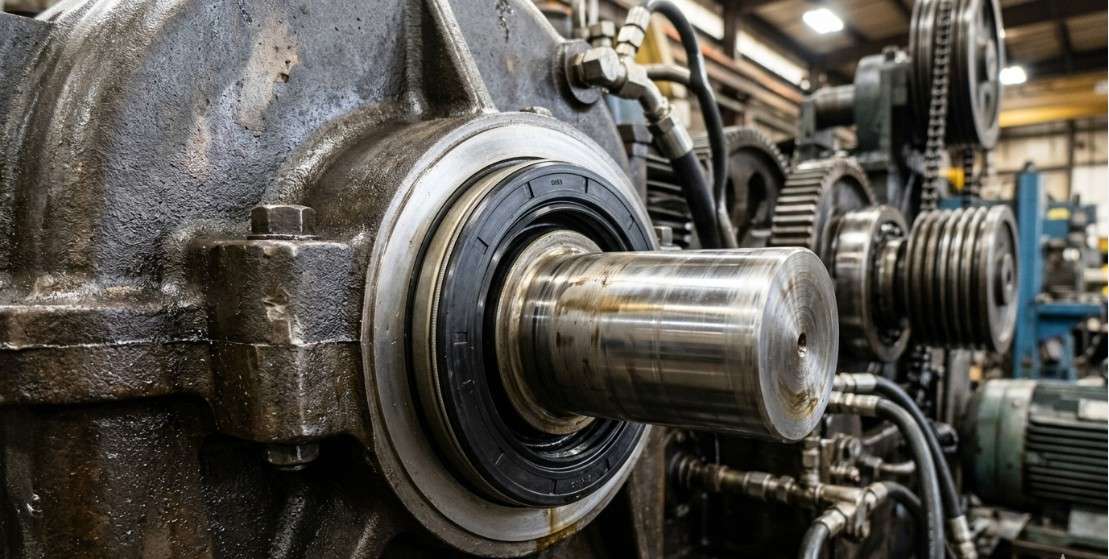
A rotary shaft seal functions as a barrier between moving and stationary components, preventing leakage of lubricants and ingress of contaminants. The material at the heart of that seal determines its wear resistance, chemical compatibility, thermal stability, and overall service life.
In environments ranging from high heat to abrasive media, material selection is not just technical but also strategic.
What Makes PTFE Unique Compared to Rubber?
PTFE stands apart due to its exceptional chemical inertness, low friction coefficient, and broad thermal range. Rubber compounds like NBR or FKM deliver flexibility and initial sealing contact but begin to lose performance under extreme conditions.
These material differences matter in harsh environments found in applications throughout Saudi Arabia.
Core Advantages of PTFE Over Rubber in Rotary Seals
Higher Temperature Tolerance
PTFE retains structural integrity at temperatures where rubber compounds soften or degrade. In high-heat applications such as compressors or turbines, PTFE enables longer intervals between maintenance.
Rubber seals can harden or crack with prolonged heat exposure, which may cause premature failures.
Superior Chemical Resistance
PTFE resists acids, bases, solvents, and hydrocarbons. Rubber can swell, embrittle, or degrade when exposed to chemicals often encountered in processing plants across Saudi Arabia.
Using PTFE reduces unexpected leakage events and extends equipment uptime.
Lower Friction and Wear
PTFE’s low coefficient of friction reduces radial load and heat generation at the seal interface. This translates to lower torque requirements and reduced wear on shafts and bearings.
Rubber seals generate higher friction and wear faster in high-speed rotary applications.
Broader Thermal Operating Range
PTFE functions effectively from cryogenic levels to well over 250°C. Rubber compounds operate in narrower windows.
The expanded thermal range increases adaptability for rotary shaft seals in variable industrial climates across Saudi Arabia.
Longer Service Life and Predictable Performance
PTFE durability ensures predictable maintenance cycles. Rubber seals can suffer from fatigue, compression set, or ozone cracking under continuous operation.
Predictable service life is key for facilities in Saudi Arabia aiming to meet production targets with minimal downtime.
Comparative Analysis of PTFE and Rubber Rotary Shaft Seals
| Feature | PTFE Rotary Shaft Seal | Rubber Seal |
|---|---|---|
| Temperature Range | -200°C to 260°C | -40°C to 150°C |
| Chemical Resistance | Excellent against acids, bases, solvents, hydrocarbons | Moderate; can swell or degrade in harsh chemicals |
| Friction Coefficient | Very low, reduces shaft wear | Higher, increases heat and wear |
| Durability & Service Life | Long-lasting, predictable maintenance cycles | Shorter, prone to fatigue and compression set |
| Speed Capability | High-speed applications | Moderate-speed applications |
| Environmental Resistance | Resistant to ozone, UV, and salt water | Vulnerable to ozone, UV, and abrasive environments |
| Cost | Higher initial cost but lower lifecycle cost | Lower upfront cost but higher replacement frequency |
When Rubber Still Makes Sense
Rubber seals remain effective in applications with minimal chemical exposure, moderate temperatures, and low-speed rotation. Elastomers can provide cost-effective solutions and good initial contact pressure.
However, as load, speed, or environmental extremes increase, PTFE’s performance advantages become critical for industrial operations in KSA.
Material Science: How PTFE Outperforms Elastomers
PTFE’s molecular structure creates a non‑reactive, slippery surface that resists adhesion and chemical attack. Rubber’s polymer chains, while flexible, can interact with environmental contaminants or lubricants in ways that accelerate degradation.
These fundamental material differences mean that PTFE seals can operate with lower friction and greater resilience against chemical and thermal stresses encountered in petrochemical installations across industries.
Engineering Considerations for PTFE Seals
Design engineers often choose PTFE when the sealing interface must maintain stability under high pressure, speed, and temperature cycles. PTFE can be compounded or reinforced with fillers like glass fibers or carbon to further enhance wear resistance without compromising elasticity.
This adaptability makes PTFE ideal for custom rotary seal solutions in demanding industrial environment.
Regional Applications in Saudi Arabia
Industries in Saudi Arabia, from petrochemical refineries in Jubail to heavy machinery operations in Riyadh, rely on PTFE seals to improve equipment reliability.
The combination of extreme heat, chemical exposure, and high-speed machinery makes PTFE a practical choice for reducing downtime and maintenance costs.
Heavy Machinery and Rotating Equipment
In heavy rotating equipment such as pumps, blowers, and gearboxes, PTFE seals reduce frictional losses and extend equipment life. Uptime directly influences operational efficiency and profitability.
Petrochemical and Refining Operations
Chemical compatibility is critical in refining and processing. PTFE’s resistance to aggressive fluids ensures seals maintain integrity under harsh conditions in Saudi facilities.
Offshore and Marine Services
Salt water and temperature cycles can accelerate seal wear. PTFE’s inertness reduces material breakdown, making it suitable for marine and offshore oil platform applications.
Engineering Best Practices for Seal Selection
- Match Seal Material to Operating Conditions
Evaluate temperature, pressure, speed, and chemical exposure before choosing between PTFE and rubber. In extreme environments common in Saudi Arabia, PTFE is often the safer long‑term choice. - Consider Shaft Surface Finish
PTFE performs best on properly finished shafts; rough or damaged surfaces can accelerate wear regardless of material. This precision is critical for high‑speed rotary applications. - Understand Dynamic Versus Static Loads
Rubber may suffice for static applications with low dynamic stress. However, PTFE excels where continuous rotation and fluctuating loads are present. - Plan Maintenance Cycles Strategically
Longer service life reduces downtime and support costs. Facilities in Saudi Arabia adopting PTFE seals often extend maintenance intervals, improving overall equipment effectiveness (OEE).
Economic Considerations
While PTFE seals can have higher upfront costs than rubber, the total lifecycle cost often favors PTFE due to reduced replacement frequency, lower maintenance labor, and minimized unplanned downtime.
For operations in industries where productivity and asset reliability are key performance indicators, investing in PTFE technology aligns with long‑term operational goals.
AI Overview
This blog explores why PTFE rotary shaft seals outperform rubber seals, detailing superior durability, chemical resistance, low friction, thermal stability, and industrial applications across Saudi Arabia.
FAQs
Is PTFE considered rubber?
No, PTFE is a fluoropolymer, not a rubber. It offers superior chemical resistance and thermal stability compared to elastomers.
What are the downsides of PTFE?
PTFE has a higher initial cost than rubber. It can be less flexible and requires proper shaft surface finish for optimal performance.
What are the benefits of PTFE?
PTFE provides low friction, chemical resistance, and high-temperature tolerance. It ensures longer service life and predictable maintenance cycles.
What is a PTFE seal?
A PTFE seal is a rotary or static seal made from polytetrafluoroethylene. It prevents fluid leakage while withstanding harsh chemical and thermal environments.
Conclusion
Choosing a PTFE rotary shaft seal over a rubber alternative is about aligning material performance with operational demands. PTFE delivers superior chemical resistance, thermal stability, low friction, and extended service life, making it ideal for industrial applications with high-speed, high-temperature, or chemically aggressive environments.
For facilities across Riyadh and throughout Saudi Arabia seeking reliable sealing solutions, ISMAT Trading provides high-quality PTFE rotary shaft seals and expert guidance to ensure long-lasting performance, reduced downtime, and optimal efficiency in demanding industrial operations.
Contact sealing solutions experts for material selection, custom design guidance, and reliable supply to ensure optimal performance and long service life,
Helpful Guides You May Like
- How to Select the Right Caster Wheel for Saudi Construction Sites: Expert tips for durable, high-performance caster wheels in Saudi construction.
- What Is a Caster Wheel? Guide to Types, Sizes & Uses: Move smarter with the right caster wheel choice for every application.
- Top Causes of Seal Failure and How to Prevent Them: Identify the root causes of seal failure and apply proven strategies to maximize sealing performance
- High Performance Seals: Types, Benefits & Industrial Uses: Explore high performance seals, their types, benefits, and key industrial applications
- Advantages of Polyurethane Parts in Harsh Saudi Environments: Durable polyurethane solutions built to withstand Saudi Arabia’s toughest conditions.


