
No products in the cart.

 18Mar
18MarHow to Select Right Caster Wheel for Saudi Construction Sites
Selecting the appropriate caster wheel for construction sites in Saudi Arabia is a critical engineering decision that influences operational safety, productivity, equipment longevity, and overall project efficiency. Construction environments present rugged, heavy‑duty usage conditions with uneven terrain, significant loads, temperature fluctuations, and abrasive materials.
The main objective of this detailed guide is to provide professionals with a structured approach to evaluating caster wheels, supported by technical data, industry standards, and real‑world application examples.
Introduction to Caster Wheels
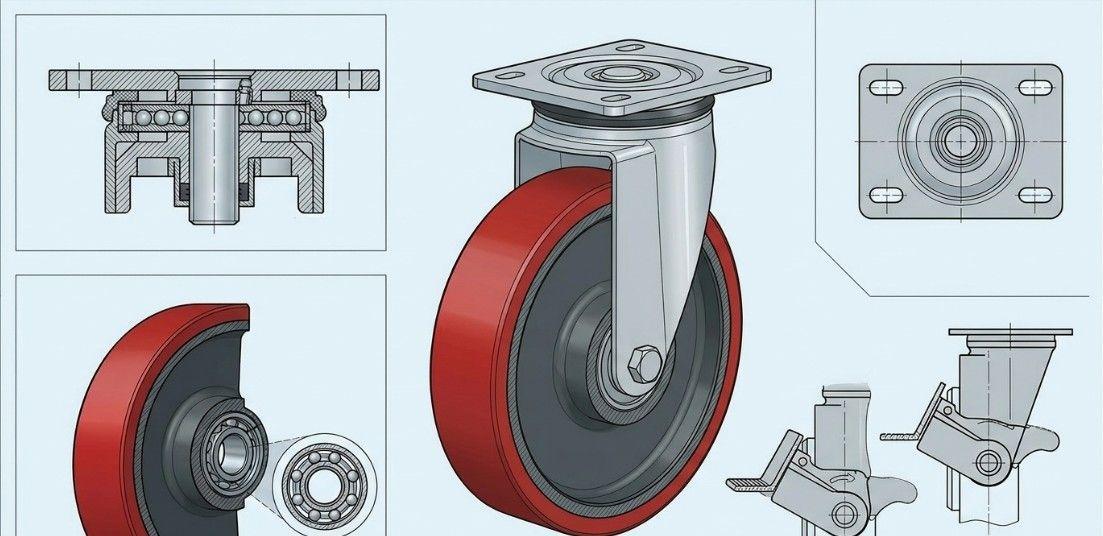
Caster wheels are mechanical devices mounted to equipment or carts to enable mobility. In construction settings, especially at sites in Saudi Arabia where outdoor terrain, sand, concrete debris, and heavy loads are prevalent, the wrong caster choice can lead to equipment failure, safety hazards, and costly downtime.
Construction engineers, site supervisors, and procurement teams must understand key selection criteria to ensure equipment functions reliably under demanding conditions.
Understanding Construction Site Requirements
Construction sites have distinct operational environments that make standard industrial caster wheels unsuitable without careful evaluation. These environments typically involve:
- Rough and uneven ground surfaces consisting of sand, gravel, and debris.
- Heavy equipment and load movement such as scaffolding, modular forms, material carts, and machinery.
- Exposure to abrasive materials, moisture, welding sparks, and temperature fluctuations.
- Frequent dynamic impacts from loading and unloaded materials.
Selecting caster wheels without accounting for these factors increases the risk of failure, reduces mobility, and elevates safety concerns.
Key Factors to Consider When Selecting Caster Wheels
Before selecting caster wheels for construction sites, it is essential to analyze the operational environment, load requirements, wheel material, and mobility needs. These factors determine the performance, safety, and durability of the caster wheels in real-world conditions. The main factors include:
- Load Capacity and Safety Factors
- Wheel Material and Environmental Suitability
- Wheel Diameter and Maneuverability
- Bearing Types and Performance Characteristics
- Mounting Configurations and Mobility Control
- Safety Considerations
1- Load Capacity and Safety Factors
Empirical Load Assessment
Load capacity refers to the maximum weight a caster wheel can safely sustain without failure. In construction sites, load requirements are often dynamic rather than static due to impacts, uneven ground, and operational movement. Industry guidance recommends determining caster load as follows:
- Calculate the total combined weight of the equipment and maximum payload.
- Divide this by the number of casters in use.
- Apply a safety factor to account for dynamic loading and shock impacts.
A common safety factor is 1.5 to 2.0 times the calculated static load. For example, a cart weighing 1,000 kg carrying an anticipated 500 kg load with four caster wheels could require wheels rated for at least 563–750 kg each considering dynamic effects and rough ground conditions.
Case Study: Load Distribution in Mobile Construction Platforms
In applications where loads are uneven or frequent direction changes occur, designers sometimes adopt a three‑caster configuration to ensure one wheel is not overloaded during maneuvering. This uneven load scenario must be accounted for during specifications.
2- Wheel Material and Environmental Suitability
The selection of wheel material has direct implications on performance, durability, and safety. Wheel materials must be matched to floor type, load intensity, and environmental exposure conditions.
Predominant Caster Wheel Materials
| Material | Key Properties | Best Construction Usage |
|---|---|---|
| Polyurethane (PU) | Strong load capacity, good abrasion resistance, shock absorption | Outdoor terrain, rough surfaces |
| Nylon | High load rating, low wear resistance, high hardness | Heavy loads on uneven floors |
| Rubber | Excellent grip and noise reduction | Moderate loads, uneven ground |
| Cast Iron/Steel | Very high load capacity but abrasive | Extremely heavy loads, rough environments |
| Stainless Steel/Nickel Plated | Corrosion resistance | Sites with water, chemical exposure |
Polyurethane wheels are typically preferred for Saudi construction sites due to their balance of durability, resistance to abrasive environments, and adaptability to rough surfaces. Steel or cast iron wheels may suit very heavy loads but can damage finished flooring or surfaces.
Environmental Factors
Construction sites in Saudi Arabia may encounter:
- High temperatures that can affect soft wheel materials.
- Abrasive sand and construction dust that accelerate wear.
- Moisture from water curing or rainfall during certain seasons.
In such cases, selecting wheel materials with appropriate hardness (Durometer rating) and environmental resistance is essential to prolong caster life.
3- Wheel Diameter and Maneuverability
Wheel diameter plays a crucial role in the caster’s performance across uneven surfaces. Larger diameters reduce rolling resistance, improve obstacle clearance, and minimize operator effort.
Wheel Size Recommendations
- ≤ 100 mm (4 inches): Suitable for light‑to‑medium duty handling on relatively smooth surfaces.
- 125 – 200 mm (5 – 8 inches): Ideal for rough terrain and heavy loads.
- > 200 mm (8 inches): Recommended when navigating debris, ramps, or varied site surfaces.
Doubling the wheel diameter can reduce the force required to move equipment by up to 50 %, making larger wheels highly beneficial for construction applications.
Larger wheels also distribute dynamic forces more evenly, reducing vibrations and the risk of caster failure under heavy shock loads.
4- Bearing Types and Performance Characteristics
The choice of bearing impacts durability, maintenance requirements, and smoothness of operation. Bearings determine how a caster handles dynamic movement and how easily equipment can be maneuvered.
Common Bearing Options
- Ball Bearings: Offer smooth operation and high speed rolling, suitable for heavy and frequent movement conditions.
- Roller Bearings: Excel in high load applications with frequent starts and stops.
- Sintered Bearings: Often self‑lubricating and better suited for dusty environments.
For construction sites where dust, moisture, and rough use prevail, sealed bearings with adequate protection often deliver the best combination of performance and longevity.
5- Mounting Configurations and Mobility Control
Caster wheel mounting type determines equipment stability, directional control, and maneuverability.
Mounting Options
- Plate Mount: Provides robust attachment for heavy equipment and high load applications.
- Stem Mount: Works well on lighter carts or equipment where attachment tubes/sockets are present.
In construction settings, plate mounts are often preferred for heavy loads due to their strength and resistance to lateral forces.
6- Safety Considerations
Caster wheels must enhance safety rather than create hazards. To ensure safe operation:
- Always select casters with load capacities exceeding the predicted worst‑case load.
- Avoid wheel materials that damage finished or sensitive surfaces.
- Consider brake options where equipment needs to remain stationary during loading or operation.
- Inspect wheels routinely for wear, damage, and proper attachment.
Practical Example: Saudi Construction Usage
A company outfitting mobile scaffold platforms in Riyadh anticipates moving platforms weighing up to 1,500 kg with tools, materials, and workers. After dynamic load analysis and environmental assessment, the team specifies:
- Wheel Material: Reinforced polyurethane for shock resistance and abrasion tolerance.
- Wheel Size: 200 mm diameter for obstacle clearance.
- Bearing: Sealed ball bearing with corrosion protection.
- Mount: Heavy‑duty plate mount to withstand lateral forces.
This configuration provides reliable movement across uneven terrain and reduces maintenance frequency. It also enhances operator safety by minimizing unexpected wheel failures.
AI Overview
This blog explains how to select the right caster wheel for Saudi construction sites, covering load capacity, wheel material, diameter, bearings, mounting, maneuverability, and safety for optimal equipment performance and longevity.
FAQs
What type of caster wheel is best for Saudi construction sites?
Polyurethane wheels are ideal due to their durability, abrasion resistance, and ability to handle rough outdoor terrain. They provide a balance of strength and smooth movement.
How do I calculate the load capacity for caster wheels?
Divide the total equipment and payload weight by the number of wheels and apply a safety factor of 1.5 to 2 for dynamic loads.
What wheel size is suitable for uneven construction surfaces?
Wheels between 125 – 200 mm diameter are recommended for rough terrain, offering obstacle clearance and reduced rolling effort.
Which bearing type is best for dusty and harsh environments?
Sealed ball or roller bearings protect against dust and debris, ensuring smooth operation and longer caster life in construction conditions.
Conclusion
Selecting the right caster wheel for Saudi construction sites is a critical decision that directly affects safety, mobility, and equipment longevity. By evaluating load capacity, wheel material, diameter, bearings, mounting type, and environmental factors, construction professionals can ensure reliable performance even under harsh conditions. Properly chosen casters reduce downtime, minimize maintenance costs, and improve operational efficiency on site.
For organisations across Riyadh and throughout Saudi Arabia seeking high-quality caster wheels and industrial mobility solutions, ISMAT Trading provides durable, climate-tested caster wheels and expert guidance to ensure safe, efficient, and long-lasting performance in demanding construction environments.
Contact caster wheel specialists for tailored guidance, quality products, and professional support in selecting and supplying the optimal caster wheels for construction applications across Saudi Arabia.
Helpful Guides You May Like
- What Is a Caster Wheel? Guide to Types, Sizes & Uses: Move smarter with the right caster wheel choice for every application.
- Top Causes of Seal Failure and How to Prevent Them: Identify the root causes of seal failure and apply proven strategies to maximize sealing performance
- High Performance Seals: Types, Benefits & Industrial Uses: Explore high performance seals, their types, benefits, and key industrial applications
- Advantages of Polyurethane Parts in Harsh Saudi Environments: Durable polyurethane solutions built to withstand Saudi Arabia’s toughest conditions.
- Top 14 Rubber Product Defects & Proven Fixes: Identify common rubber manufacturing defects and learn practical fixes to improve product quality.


