
No products in the cart.

 4Feb
4FebWhat are Industrial Rubber Products? Types & Applications
Industrial rubber products are essential materials used across manufacturing, automotive, construction, mining, and chemical industries. They are engineered to provide durability, flexibility, chemical resistance, and vibration control, making them critical for maintaining operational efficiency and protecting machinery.
Businesses rely on certified industrial rubber suppliers to ensure high-quality products that meet industry standards and safety requirements.
Understanding the types, applications, evaluation criteria, and supplier selection is key for buyers seeking reliable industrial rubber products for industrial or commercial use.
What Are Industrial Rubber Products?
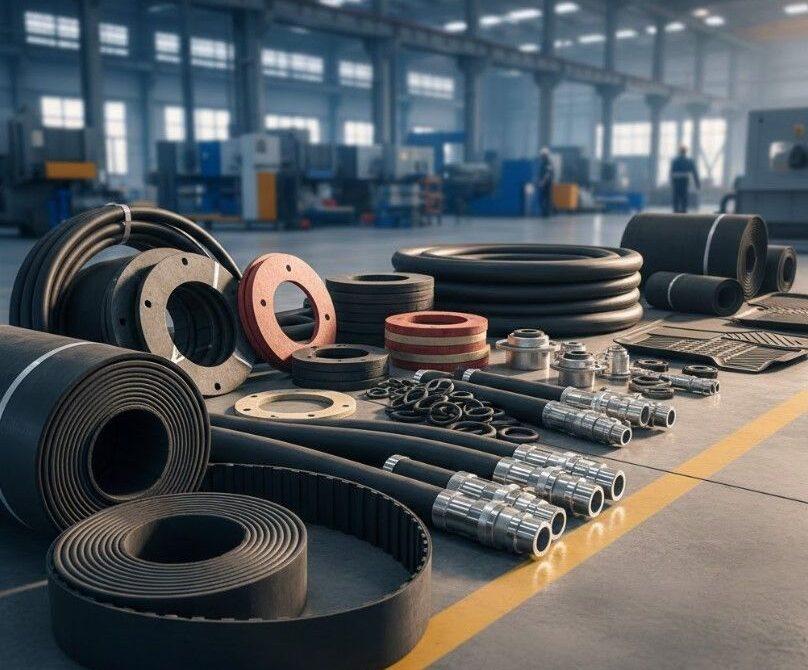
Industrial rubber products are materials made from natural or synthetic rubber compounds, designed to withstand extreme temperatures, mechanical stress, and chemical exposure. They are widely used for:
- Sealing and gaskets to prevent leaks
- Hoses and pipelines for fluid transfer
- Pads and mounts for vibration isolation
- Protective lining for industrial equipment
- Custom molded components such as bushings and diaphragms
Key Features:
- Durability: Resistant to wear, abrasion, and environmental factors
- Flexibility: Easily molded into sheets, hoses, belts, and custom parts
- Chemical Resistance: Handles oils, acids, solvents, and industrial fluids
- Temperature Stability: Maintains performance under extreme heat and cold
- Vibration Dampening: Reduces noise and mechanical stress in machinery
Types of Industrial Rubber Products
Industrial rubber products are categorized by function, material, and application. The table below highlights the most common types with their applications and core features:
| Product Type | Common Applications | Key Features |
| Rubber Sheets | Gaskets, protective lining, flooring | Flexible, abrasion-resistant, chemical-resistant |
| Rubber Hoses | Fluid transfer, chemical conveyance, air and water pipelines | Pressure-resistant, flexible, temperature-stable |
| Rubber Seals & Gaskets | Leak prevention in pipelines, valves, and machinery | Chemical-resistant, durable, temperature-stable |
| Rubber Pads & Mounts | Vibration isolation in machinery | Shock-absorbing, long-lasting, stable |
| Rubber Belts | Conveyors and power transmission systems | High tensile strength, wear-resistant, durable |
| Custom Molded Rubber | Bushings, diaphragms, specialized components | Tailored properties, precision-engineered |
Applications of Industrial Rubber Products
Industrial rubber products serve operational, protective, and safety needs across multiple industries.
Automotive Industry
Rubber hoses, belts, gaskets, and vibration dampeners enhance engine efficiency, leak prevention, and noise reduction. Automotive manufacturers rely on automotive-grade industrial rubber components from trusted suppliers with warranty coverage and technical support.
Construction and Engineering
Rubber sheets and pads are essential for flooring, waterproofing, vibration isolation, and protective lining in industrial and commercial construction projects. Buyers often require custom solutions for specialized engineering applications.
Mining and Heavy Equipment
Rubber hoses and protective pads withstand abrasion, chemical exposure, and extreme conditions, ensuring machinery longevity and operational safety. Selecting durable, high-performance rubber reduces downtime in heavy industries.
Manufacturing and Industrial Plants
Seals, gaskets, and belts optimize production line efficiency, fluid control, and machinery performance. Certified products from reputable suppliers guarantee consistent material quality and compliance with ISO and ASTM standards.
Chemical and Oil Industries
Chemical-resistant rubber products, including hoses, gaskets, and seals, handle acids, oils, and industrial solvents safely, preventing equipment failure and minimizing hazards. Verified supplier specifications and warranty support are critical in these applications.
How to Evaluate Industrial Rubber Products
Selecting the right industrial rubber products requires evaluating quality, performance, and supplier credibility. Key criteria include:
| Evaluation Criteria | Why It Matters |
| Material Quality | Determines durability, chemical resistance, and operational lifespan |
| Supplier Reputation | Trusted suppliers ensure consistent, reliable product performance |
| Compliance & Certification | ISO, ASTM, or other standards confirm reliability and safety |
| Warranty & Support | Protects against defects and provides technical assistance |
| Cost Efficiency | High-quality rubber reduces long-term replacement costs |
| Customization Options | Tailored solutions meet unique industrial or operational requirements |
Selecting a Reliable Supplier
Working with a verified supplier ensures operational efficiency and long-term reliability. Key considerations include:
- Authorized Distributors: Ensures genuine products and compliance with standards.
- Comprehensive Product Range: Sheets, hoses, seals, gaskets, belts, and custom components.
- Technical Support: Guidance on selection, installation, and troubleshooting.
- Delivery Reliability: Timely supply reduces project delays and downtime.
Buyer Guidance and Tips
- Determine application requirements before selecting a rubber product.
- Verify supplier certifications for ISO, ASTM, or other relevant standards.
- Check warranty and after-sales support for long-term reliability.
- Consider environmental conditions such as temperature, pressure, and chemical exposure.
- Evaluate customization options for specific machinery or operational needs.
FAQs
What are industrial rubber products used for?
They are used for sealing, insulation, vibration control, and protective applications across industries.
Which industries commonly use rubber sheets and hoses?
Automotive, construction, chemical, mining, and manufacturing sectors.
How do I choose a reliable industrial rubber supplier?
Select authorized distributors with certifications, warranty coverage, and technical support.
Can industrial rubber products withstand high temperatures?
Yes, industrial-grade rubber maintains performance under extreme heat and cold.
What should I check before buying rubber gaskets or seals?
Evaluate material quality, chemical resistance, compliance, and lifecycle cost.
Are custom molded rubber components available?
Yes, many suppliers provide tailored solutions for specialized industrial applications.
Conclusion
Industrial rubber products are essential for durable, flexible, and chemical-resistant industrial operations. From rubber sheets, hoses, gaskets, to custom molded components, these products support efficient machinery, leak prevention, and vibration control across industries.
Selecting the right product type and working with reliable industrial rubber suppliers in Saudi Arabia ensures consistent performance, compliance with standards, and long-term cost efficiency.
By evaluating material quality, certifications, warranty, and customization options, buyers can make informed decisions that enhance operational efficiency and reduce downtime.
Explore More Expert Insights
- Advantages of Polyurethane Parts in Harsh Saudi Environments: Engineered polyurethane parts resist wear in harsh conditions.
- Choosing the Right Mechanical Seal for Your Industry: Avoid leakage and downtime with the right seal choice.
- Engineering Plastics: Types, Applications & Benefits: High-performance plastics for industrial applications.
- Polyurethane vs Traditional Materials: Which One Wins?: Compare durability, flexibility, and performance.
- Different Types of Plastic Seals and Their Applications: Common plastic seals and their industrial uses.


